
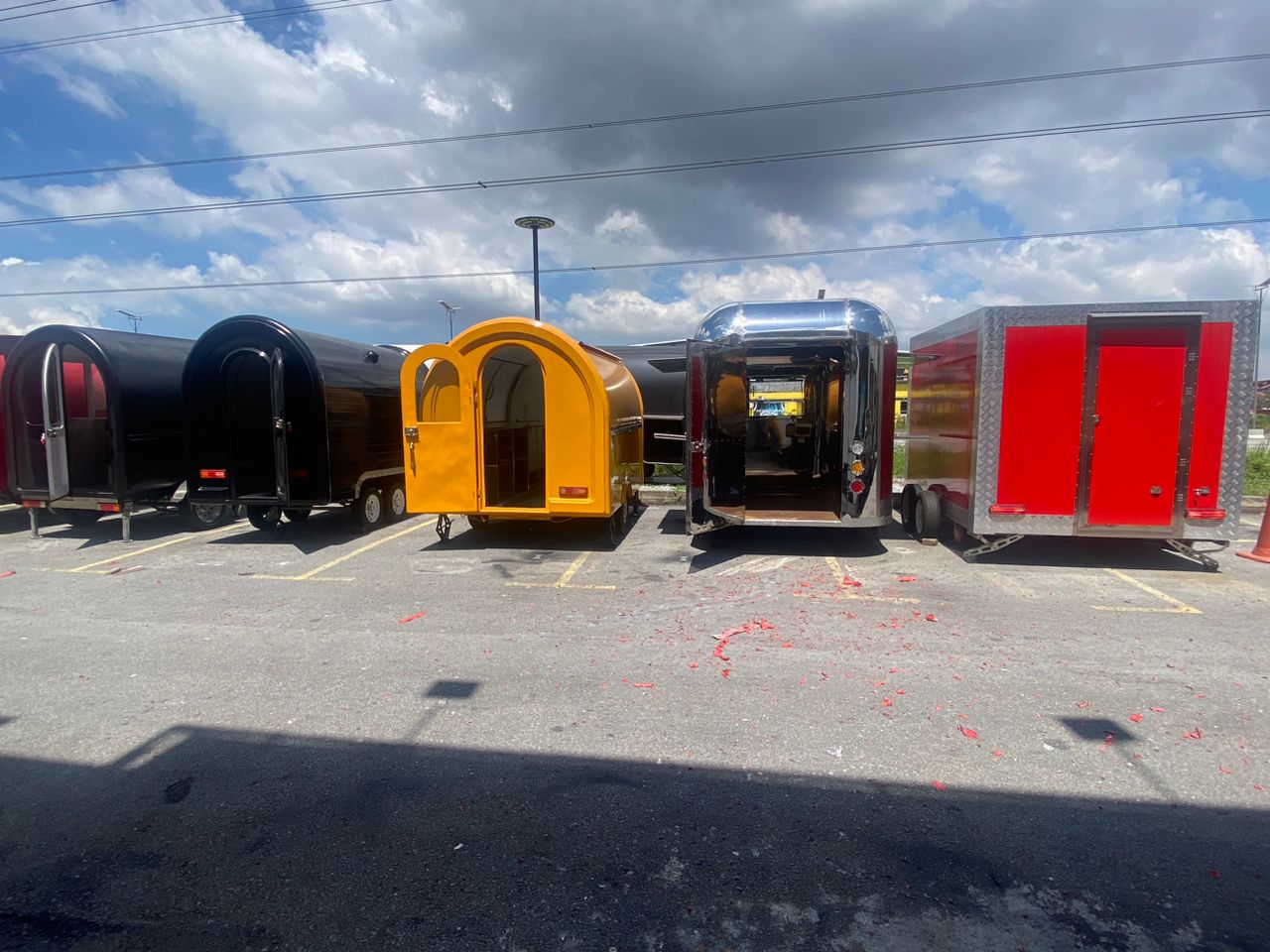
A vision to bring back green cruising kitchens
A Malaysian based in Melbourne, Australia hopes to revitalise the street food scene in his home state of Penang by commercialising his invention of incorporating aircraft kitchen designs into green “cruising kitchens” on wheels, which can be stationary or mobile
Originally from Sungai Bakap in Nibong Tebal, Penang, S.M. Ronn Nantha has travelled the world during his stint as a crew member of the Singapore Airlines and recently, he also worked in a hospital in Melbourne, Australia.
It was during the pandemic period which drove Nantha to transfer the concept of an aircraft kitchen technology into a food truck, which he called “cruising kitchens.”
Nantha advocated a need to be innovative and practical in dealing with “problems,” and it lead him to think outside of the box to come out with this new concept of making food more accessible and faster to the ever hungry stomachs.
The catch here is that such food should comprise of the favorite hawker fare in view that Penang is etch on the global map as a preferred global street food destination.
He held a dream for 35 years and for the past 12 years he meticulously pursued the designing and refining his concept of inventing aircraft kitchen into a food truck.
Nantha realised that the same technology used in aircraft kitchens could be easily adapted for use in food trucks.
He envisioned a system that was compact, efficient, and capable of producing high-quality food quickly and easily, serving up to 350 customers within two hours.
It would be mobile, inside a caravan – like vehicle, which can then be pulled and easily moving around Malaysia, providing fresh, hot hawker – type meals to the public with minimal waste.
The vehicles are green – driven, using solar energy, harvesting rainwater and only biodegradable materials in order to support the environment, he said.
He has drafted technical drawings, researched materials, and consulted with engineers before signing on with a local manufacturer to mass produce the vehicles.
It is arguably the first of its kind in Malaysia, is specially fitted with an inbuilt aircraft kitchen devices and it can travel all over the country, said Nantha.
In an interview held in conjunction with the 62nd Malaysia Day celebrations, Nantha recalled that he had first worked in Australia at a private hospital over a decade ago, he chanced upon caravan food truck settings in many locations.
“A Malaysian can go anywhere in the world but he or she will have taste buds that possess the cravings for home food or mom’s delights. I have such a feeling.”
He needed to bring back something special from Australia and the concept of a caravan food truck was seen as something which is re-saleable in Malaysia.
“There are food trucks operating in Malaysia but they look mundane as the vendors think of it as mostly an automobile to transport and sell food. Mine is stylist in nature and it is meant to appeal as both a decorative vehicle with tasty food in tow.”
Nantha plans to rollout the first Malaysian – made caravan models soon under his company – Alam Anda Design & Build Sdn Bhd.
For now, Nantha has embarked on a regional marketing drive up north to promote the concept of increased mobility of the food trucks with better access to food.
Most importantly, the operator can serve the food faster and maintain quality.
Nantha also realised that for the “cruising kitchens” to succeed, he needs to change the culture of how the public eat their street food by convincing popular hawkers to invest in such models so their food can be easily available in other localities and served faster so the waiting line is reduced.
It can also bring in a new dining experience, as the food trucks can be dismantled and placed in a permanent dining area too, such as in recreational parks if there is approval from the respective city councils here.”
Nantha is determined to see this concept flourish.
He is now also busy engaging the local authorities to gain permission and to also seek consent from the Road Transport Department (RTD) to approve his models.
“We need to be fully accredited and licensed so, discussions are ongoing to get the consent to make this concept a reality.”