
Silence is not an option Malaysia, voice out against human rights violation on Bangladesh’s minorities
Malaysia and Bangladesh share long-standing diplomatic, economic, and people to people ties. Hundreds of thousands of Bangladeshis live and work in Malaysia, contributing to Malaysia’s labour force and economy.
These connections mean that what happens in Bangladesh matters deeply to our region.
As ASEAN Chair, Prime Minister Datuk Seri Anwar Ibrahim carries significant moral responsibility. When minority communities face violence and lives are at immediate risk, silence does not protect peace.
This situation calls for timely, compassionate, and visible leadership. Speaking out is not hostility. It is a reaffirmation of shared human values.
I write not only as a journalist or as Vice Secretary of a human rights organisation, but as someone who believes deeply in a simple truth. When it comes to humanity, there are no borders and selective empathy betrays our shared values.
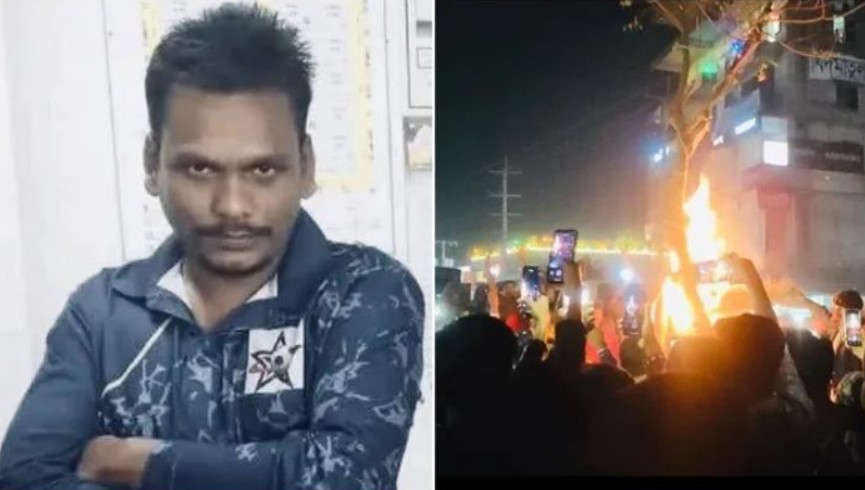
What is unfolding in Bangladesh should shake every conscience. In Mymensingh, a young Hindu man, Dipu Chandra Das, was brutally beaten to death by a mob over allegations of blasphemy, and his body was tied to a tree and set on fire.
This was not spontaneous violence. It was a deliberate act of terror meant to intimidate an entire community.
The outrage spread beyond borders. Protests erupted in West Bengal and Agartala, with citizens demanding justice and accountability not only locally, but internationally.
When people across countries respond, it signals that the violence is no longer local. It is human.
These are not isolated incidents. There is documented evidence of Hindu homes being looted and burned, families displaced overnight, and women physically assaulted during attacks.
Children have witnessed homes reduced to ashes, schooling disrupted, and their sense of safety shattered. Identity cards, school certificates, and legal documents have been destroyed, leaving families without proof of existence or access to basic rights.
In May, a 50-year-old Kali temple in Manikganj was destroyed in a pre-dawn arson attack. For that community, it was not merely a building that was lost, but a place of faith, belonging, and refuge.
Rights groups have also shared reports alleging that a seven-year-old child connected to a political leader was burned amid political violence.
While investigations continue, even the possibility that a child could be harmed in such brutality exposes the depth of the crisis. When children are targeted, all political explanations collapse. There is no justification.
The most urgent question remains unanswered: where will the women and children go?
When homes are destroyed and fear becomes routine, families are left with impossible choices to flee, to hide, or to live under constant threat. Children who grow up witnessing such violence carry trauma that shapes their trust in society and their future for life.
Bangladesh is currently under an interim government led by Nobel laureate Muhammad Yunus, following political upheaval that removed former Prime Minister Sheikh Hasina from office.
Yunus serves as Chief Adviser to the interim government, tasked with guiding the nation toward elections and stability.
When victims consistently belong to minority communities, when women and children are harmed, and when accountability remains absent, it becomes increasingly difficult to deny that targeted persecution is taking place.
Malaysia cannot afford silence.
As a country that hosts a large Bangladeshi migrant population and as a regional leader, Malaysia’s voice matters. Prime Minister Anwar Ibrahim should raise these concerns directly with the Prime Minister of Bangladesh, asking what concrete steps are being taken to protect minorities, women, and children and why these protections continue to fail.
Humanity does not wait for diplomatic comfort. When women are attacked, when children are harmed or displaced, and when people are killed for who they are, these are not political inconveniences. They are moral emergencies.
There is also a necessary conversation Malaysia must confront. Many Bangladeshis come here seeking honest work and dignity. But when people flee environments marked by extreme violence and trauma, the effects do not disappear at the border.
Unaddressed trauma travels silently, affecting social cohesion and long-term stability.
This is not about blaming migrant workers. It is about foresight and responsibility.
If violence against minorities, women, and children continues unchecked in Bangladesh, what risks does this pose for Malaysia’s future social harmony and regional security?
Can we afford to remain silent today and manage the consequences tomorrow?
For those who wish to witness the scale of suffering faced by minorities in Bangladesh, visual documentation shared by civil society groups can be found on the Instagram pages Rescue Sindhi Hindus and Voice of Bangladeshi Hindus, where denial becomes difficult.
We must choose empathy clearly, urgently, and without borders. Because silence in the face of such suffering is not neutrality. It is complicity.
Hema Subramaniam is a broadcast journalist and vice secretary of Global Human Rights Federation.