
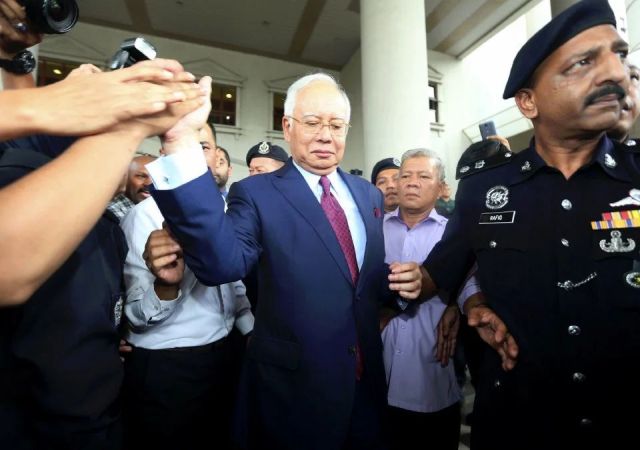
Najib, House Arrest, and the Malaysia We Are Still Becoming
Joseph Masilamany
The High Court’s decision to reject Datuk Seri Najib Razak’s application for house arrest should have been straightforward. Constitution consulted. Process examined. Law applied. Case closed.
Yet the intensity of the reaction — anger, relief, triumphalism, grief — reveals that this case was never just about where Najib serves his remaining sentence. It is about something Malaysia has been wrestling with since 2018: whether power still bends the system, or whether the system has finally learned to resist power.
Justice Alice Loke Yee Ching’s ruling was unequivocal. The alleged addendum order by the former Yang di-Pertuan Agong was invalid because it did not comply with Article 42 of the Federal Constitution. It was neither deliberated nor decided by the Pardons Board. Without that constitutional process, there was no lawful order to enforce.
This was not judicial drama. It was judicial discipline.
And in today’s Malaysia, discipline is revolutionary.
The Temptation of Exceptionalism
Najib’s supporters argue that house arrest is humane, reasonable, even customary for a former prime minister. His critics counter that he deserves no special consideration.
Both sides, however, circle the same dangerous assumption: that Najib is an exception — either worthy of mercy beyond the ordinary, or of punishment beyond the law.
The court rejected that premise entirely.
Article 42 exists precisely to prevent exceptionalism. It ensures that clemency is not dispensed through whispers, assumptions, or retrospective interpretations of royal intent. It anchors mercy to process.
Had the court validated an undocumented, non-deliberated addendum order, it would have signalled that constitutional procedures are optional when the accused is powerful enough. That would not have been compassion. It would have been capitulation.
Why This Ruling Matters Beyond Najib
Najib Razak will continue serving his sentence at Kajang Prison. But the ruling’s real audience was not Najib. It was the political class.
For decades, Malaysia operated on an unspoken hierarchy of accountability. Ordinary citizens faced the full weight of the law. Elites negotiated their exits quietly. Influence mattered. Connections mattered more.
The 1MDB scandal shattered that arrangement, but it did not erase the instinct to restore it.
The house arrest application was, in many ways, a test balloon: how far could the old logic be stretched in the new Malaysia?
The answer, at least for now, is: not far enough.
*Popularity Is Not Innocence*
Najib’s enduring appeal — the “Bossku” phenomenon — complicates the picture. He remains popular across racial and class lines, buoyed by nostalgia and economic discontent.
For many Malaysians, life felt more predictable during his tenure. That emotional memory is real, even if incomplete.
But courts are not referendum halls.
If popularity were a mitigating factor, Malaysia’s justice system would collapse under the weight of sentiment. Today it is Najib. Tomorrow it could be anyone with a loyal base and a compelling narrative of grievance.
Justice Loke’s ruling quietly reaffirmed a principle that democracies ignore at their peril: the law does not compete with charisma.
The Monarchy and the Constitution
Some have framed the ruling as a slight against royal authority. It is not.
In fact, it does the opposite.
By insisting that royal clemency must flow through Article 42, the court protected the monarchy from politicisation. Informal or opaque interpretations of royal intent expose the institution to controversy, contestation, and erosion of moral authority.
In a constitutional monarchy, the Constitution is not a constraint on royalty — it is its shield.
Today’s ruling reinforced that balance.
Selective Justice: The Argument That Never Ends
Perhaps the most emotionally potent response to the ruling is this: “Others were not punished like him.”
This grievance is understandable. Malaysia has a long history of selective enforcement. Many powerful figures have evaded accountability.
But selective injustice is not cured by expanding privilege. It is cured by narrowing it.
Allowing Najib to bypass constitutional procedure would not have corrected past failures. It would have confirmed them.
The uncomfortable truth is this: every high-profile conviction that holds weakens the old culture of impunity — but only if the system does not blink afterwards.
Blinking now would have undone years of institutional effort.
A Judiciary Finding Its Spine
This ruling also arrives at a delicate moment for the judiciary. Public confidence has been bruised by inconsistency, delay, and perceived political sensitivity.
That is why the clarity of this decision matters.
Justice Loke did not editorialise. She did not moralise. She did not yield to public noise. She applied the Constitution as written.
In doing so, she reminded Malaysians that judicial independence is not always a loud voice. Sometimes it is expressed through a simple refusal to bend.
Where Malaysia Goes From Here
This decision does not end debates about mercy, sentencing reform, or prison conditions. Nor should it. Those are legitimate policy discussions.
But it draws a firm boundary: clemency must be constitutional, or it is not clemency at all.
If Najib Razak is to receive further relief, it must be through the proper channels — openly, institutionally, and in full compliance with Article 42. Anything else invites cynicism and corrodes trust.
Conclusion: The Long Work of Becoming
Malaysia is still becoming the country it claims to be.
Every generation inherits institutions shaped by compromise, courage, and contradiction. The test is whether those institutions can mature — whether they can say “no” when saying “yes” would be easier.
The High Court said “no” today.
Not to mercy.
Not to humanity.
But to shortcuts, shadows, and the old habits of power.
That may not satisfy everyone. But it moves Malaysia, however incrementally, closer to a future where the law does not ask who you are before deciding what applies to you.
And that is a future worth the discomfort.