
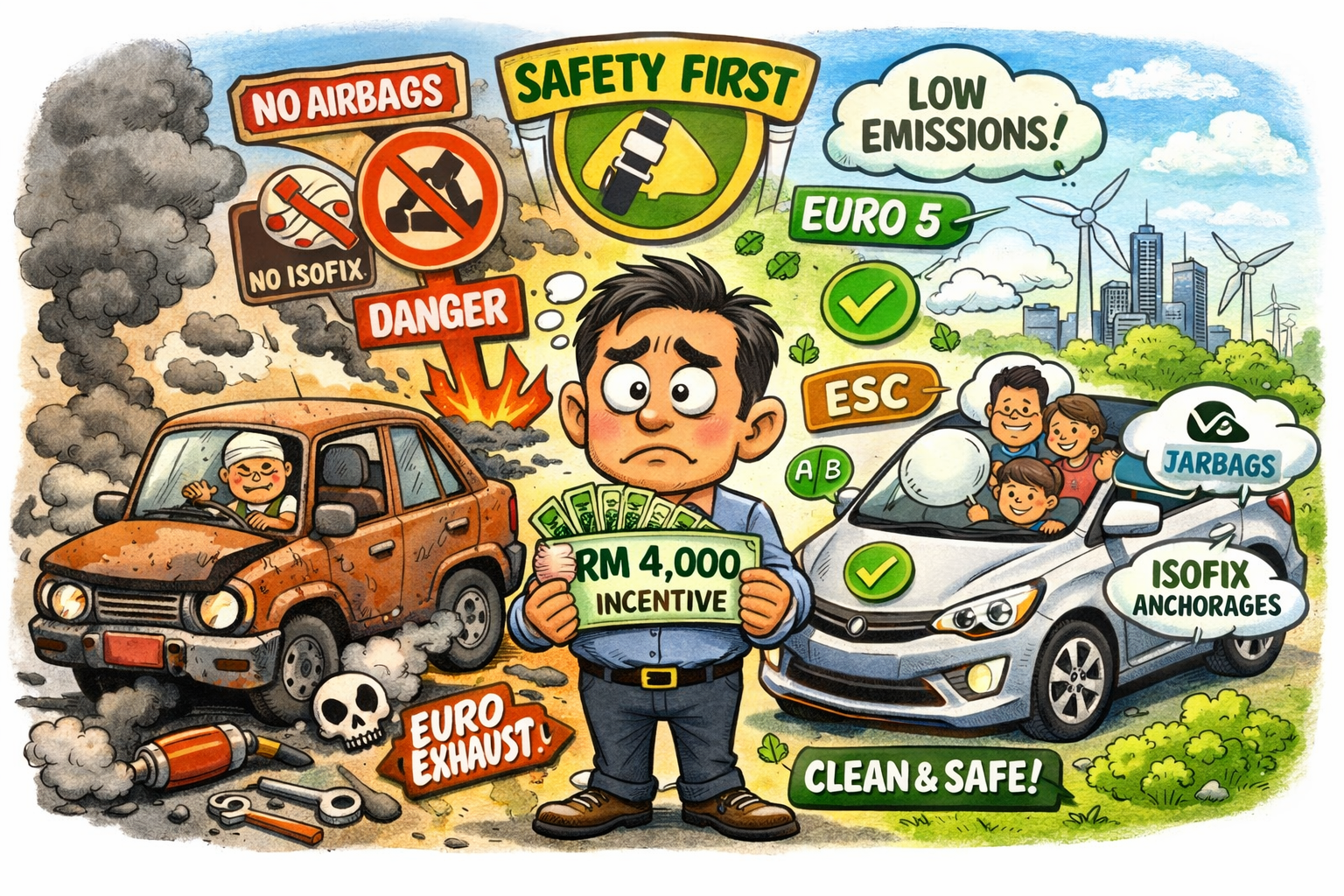
RM4000 to retire old cars: Safer roads, cleaner air – but is it affordable enough?
IR DR RIFQI IRZUAN ABDUL JALAL
Newer vehicles are undeniably safer, cleaner, and more environmentally responsible. Advances in structural crash protection, braking systems, and active safety technologies have transformed modern cars into significantly more protective mobility solutions compared with vehicles produced two decades ago.
At the same time, improvements in engine efficiency and emissions control have reduced pollutants and greenhouse gas output, aligning closely with Malaysia’s longer-term sustainability ambitions, including the national commitment towards carbon neutrality by 2050. Against this backdrop, the government’s RM4,000 incentive encouraging owners of vehicles over 20 years old to retire their cars represents a logical and timely intervention.
From a road safety standpoint, the justification is compelling. Vehicles designed more than 20 years ago were built to safety expectations that are substantially behind today’s standards.
Many lack Electronic Stability Control, comprehensive airbag systems, and modern crash energy management structures, while child safety provisions such as International Standards Organisation FIX (ISOFIX) anchorages were not universally available.
Encouraging the gradual replacement of these ageing vehicles reduces exposure to outdated protection levels and helps lower injury severity and fatality risks in traffic collisions. Even incremental improvements in fleet safety characteristics can deliver meaningful public health benefits over time.
Environmental considerations provide an equally strong argument. Older vehicles commonly operate under Euro 2 or earlier emission standards, whereas newer vehicles in Malaysia are required to meet Euro 4 or Euro 5 requirements. The reduction in harmful pollutants such as nitrogen oxides, hydrocarbons, carbon monoxide, and particulate matter is significant. As higher-emission legacy vehicles are phased out, urban air quality stands to benefit.
While carbon dioxide reductions vary depending on engine type and usage patterns, newer vehicles generally achieve better fuel efficiency and lower emissions per kilometre. Fleet renewal therefore complements national climate objectives while improving local environmental conditions.
Affordability Remains the Core Tension
The economic implications, however, require a more nuanced discussion. Owners of vehicles exceeding 20 years are often from lower-income households. For many, an older car is retained not by choice but necessity.
These vehicles are typically fully paid, insurance costs are modest, and replacement, even with the RM4,000 incentive, introduces new financing commitments that may strain monthly cashflow. This concern is legitimate and underscores the importance of affordability and accessibility within the policy framework.
Yet the financial comparison is rarely as simple as loan repayments versus no loan. Ageing vehicles often impose hidden operating costs that accumulate gradually. Older engines tend to consume more fuel, experience declining efficiency, and in some cases require regular engine oil top-ups.
Maintenance intervals shorten, component failures become more frequent, and repair unpredictability increases. Parts availability may also diminish over time, making proper restoration technically difficult or economically unjustifiable. These recurring expenditures can erode the perceived cost advantage of keeping an older vehicle.
When viewed holistically, upgrading to a newer vehicle can, under the right circumstances, stabilise household mobility expenses. Improved fuel efficiency, a lower likelihood of major breakdowns, and fewer unscheduled repairs introduce greater predictability into ownership costs. For households already managing high spending on fuel, servicing, and repeated repairs, the transition to fixed monthly instalments may not represent a significant deterioration in financial burden.
At the industry level, the initiative may stimulate new vehicle demand and support Total Industry Volume. The benefits extend beyond manufacturers to the wider automotive ecosystem, including suppliers, dealerships, service networks, insurers, logistics providers, and financial institutions.
The automotive sector’s multiplier effects across the economy remain substantial, reinforcing employment, technological capability, and overall investment attractiveness.
In conclusion, the RM4,000 vehicle retirement incentive reflects a positive policy direction with clear safety and environmental merits. Concerns regarding affordability, particularly among lower-income households, should not be dismissed.
At the same time, the rising operational inefficiencies and repair uncertainties associated with ageing vehicles must also be acknowledged.
The long-term success of the initiative will depend on ensuring that the pathway to safer and cleaner mobility remains both encouraged and realistically attainable.
Ir Dr Rifqi Irzuan Abdul Jalal is an Associate Professor at the School of Engineering, Faculty of Innovation & Technology, Taylor’s University, specialising in vehicle technology, electrification, and mobility systems. He also serves as an Executive Committee member of the Society of Automotive Engineers Malaysia.