
Strategic Diplomacy in Motion: Prabowo, Anwar and ASEAN’s Emerging Role
By DR SHAHNOR BASRI
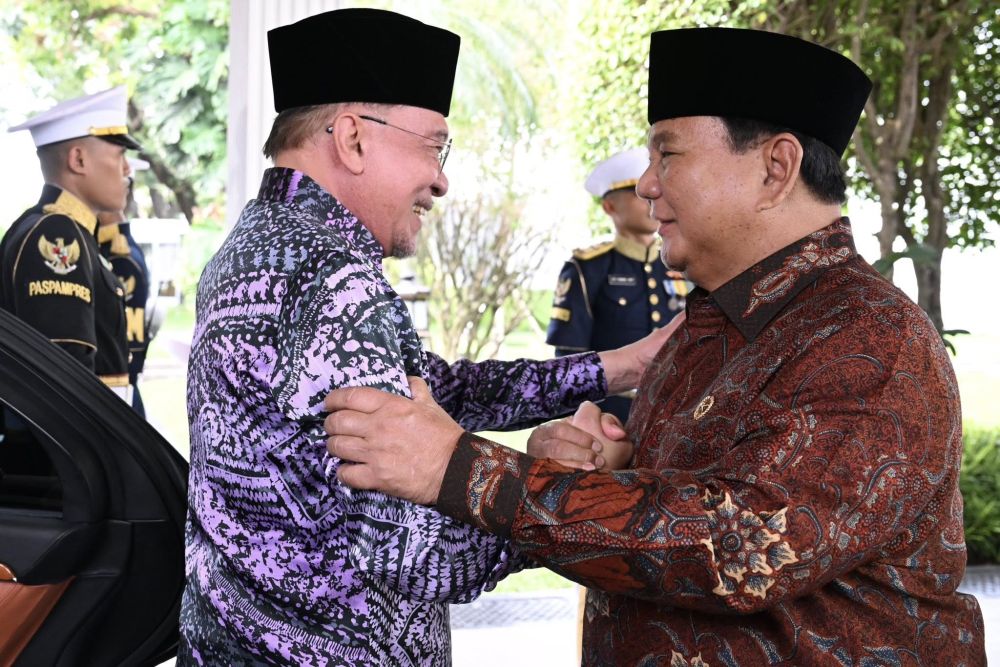
The meeting in Jakarta between Malaysia’s Prime Minister, Anwar Ibrahim, and Indonesia’s President, Prabowo Subianto, could not have come at a more consequential moment. As tensions between Israel, Iran and the United States edge closer to a wider regional war, their high-level engagement signals more than routine bilateral diplomacy—it reflects the early formation of a coordinated Southeast Asian response to one of the most dangerous geopolitical crises of our time.
This was not merely a symbolic visit. It was a strategic convergence. Both leaders explicitly agreed to intensify diplomatic efforts to de-escalate the Middle East conflict, protect civilian lives and create space for negotiations toward a sustainable peace. In doing so, Kuala Lumpur and Jakarta are positioning themselves not as passive observers, but as proactive actors within an increasingly fragmented global order.
Anwar Ibrahim’s Visit: Moral Diplomacy Anchored in Action
Anwar Ibrahim’s presence in Jakarta transforms diplomatic intent into coordinated policy. The meeting between the two leaders opened constructive space to find common ground in addressing the Middle East crisis, particularly its impact on global energy security and economic stability.
Crucially, both leaders emphasized the need to safeguard global supply chains and strategic trade routes, including the Strait of Hormuz, highlighting the direct economic stakes for Asia. This alignment demonstrates that their diplomacy is not confined to rhetoric—it is anchored in concrete economic and security concerns.
Anwar’s role is central in shaping the moral and diplomatic architecture of this engagement. Malaysia, under Anwar, can advance several parallel initiatives.
First, Kuala Lumpur can spearhead a Global South diplomatic coalition that reinforces neutral mediation efforts and reduces reliance on great-power intervention.
Second, Malaysia can lead humanitarian diplomacy—coordinating aid delivery, civilian protection mechanisms and post-conflict reconstruction planning.
Third, Anwar can revive calls for a comprehensive international conference addressing the Palestinian question, recognizing that without resolving this core issue, cycles of violence will persist.
Through these measures, Anwar transforms moral positioning into actionable diplomacy, reinforcing the legitimacy of ASEAN’s engagement.
Prabowo Subianto: Strategic Leadership Beyond the Region
President Prabowo Subianto’s role in this evolving diplomatic alignment is equally significant. His leadership is shaped by a rare combination of military experience, geopolitical assertiveness and an outward-looking foreign policy that seeks to elevate Indonesia’s role on the global stage.
Unlike many leaders constrained by purely diplomatic frameworks, Prabowo understands the operational realities of conflict escalation. This gives weight to Indonesia’s position when advocating restraint in the Israel–Iran confrontation. More importantly, it enables Jakarta to propose credible security-oriented diplomatic solutions rather than abstract appeals for peace.
Indonesia has signaled willingness to act as a mediator in the Iran conflict, with Prabowo expressing readiness to engage directly with key regional actors in pursuit of de-escalation. At the same time, his consistent support for a two-state solution reflects an effort to balance moral legitimacy with geopolitical realism.
From this position, Prabowo can advance several explicit policy directions.
First, Indonesia can institutionalize its role as a neutral mediator by initiating backchannel diplomacy involving Iran, key Arab states and Western actors—leveraging its credibility as a non-aligned power.
Second, Jakarta can operationalize its diplomatic posture by preparing ASEAN-supported humanitarian or monitoring missions, should a ceasefire framework emerge.
Third, Prabowo can push for a structured international security dialogue that prioritizes the protection of strategic maritime corridors, particularly the Strait of Hormuz—whose disruption would have immediate global economic consequences.
These are not theoretical propositions, but actionable strategies grounded in Indonesia’s expanding diplomatic reach.
ASEAN’s Strategic Inflection Point
The convergence of Anwar and Prabowo’s leadership signals a potential turning point for the Association of Southeast Asian Nations. Historically defined by cautious regionalism, ASEAN now faces an opportunity to extend its diplomatic model into global crisis management.
The Jakarta engagement underscored the importance of principled regional cohesion in preserving stability and economic resilience. This reflects a broader ambition: to position ASEAN as a stabilizing force amid global uncertainty.
If effectively coordinated, this leadership could translate into several institutional outcomes.
ASEAN could convene an emergency multilateral forum linking Middle Eastern stakeholders with Global South mediators.
It could advocate international guarantees for the security of energy and trade routes critical to global markets.
It could also amplify collective diplomatic pressure for ceasefire agreements grounded in international law and humanitarian principles.
Such initiatives would redefine ASEAN’s global role—not as a passive bloc, but as an active diplomatic bridge between competing geopolitical spheres.
A Convergence of Strategy and Principle
What distinguishes the Anwar–Prabowo partnership is not merely proximity or shared interests, but the convergence of two distinct yet complementary forms of leadership.
Anwar Ibrahim brings moral clarity—anchored in international law, justice and multilateral engagement.
Prabowo Subianto brings strategic weight—grounded in military experience, security awareness and geopolitical pragmatism.
Their recent meeting in Jakarta demonstrates how these approaches can be synchronized into a coherent diplomatic strategy. It is precisely this combination that gives Southeast Asia a credible voice in a crisis increasingly dominated by military escalation.
Conclusion: From Regional Actors to Global Stakeholders
The Middle East crisis has exposed the limitations of traditional power structures in managing global conflict. As major powers become increasingly entangled in confrontation, the responsibility for advocating peace shifts toward emerging actors capable of bridging divides.
The Jakarta engagement between Anwar Ibrahim and Prabowo Subianto represents an early but significant step in that direction. Their commitment to intensifying diplomatic efforts, safeguarding global stability and promoting negotiation over confrontation signals a broader evolution in ASEAN’s strategic identity.
In a world edging toward fragmentation, Southeast Asia—through the leadership of Kuala Lumpur and Jakarta—may yet demonstrate that credible, principled and strategically grounded diplomacy remains the most viable path to preventing war.
READ ALSO Who is plotting attacks against Ramanan?