
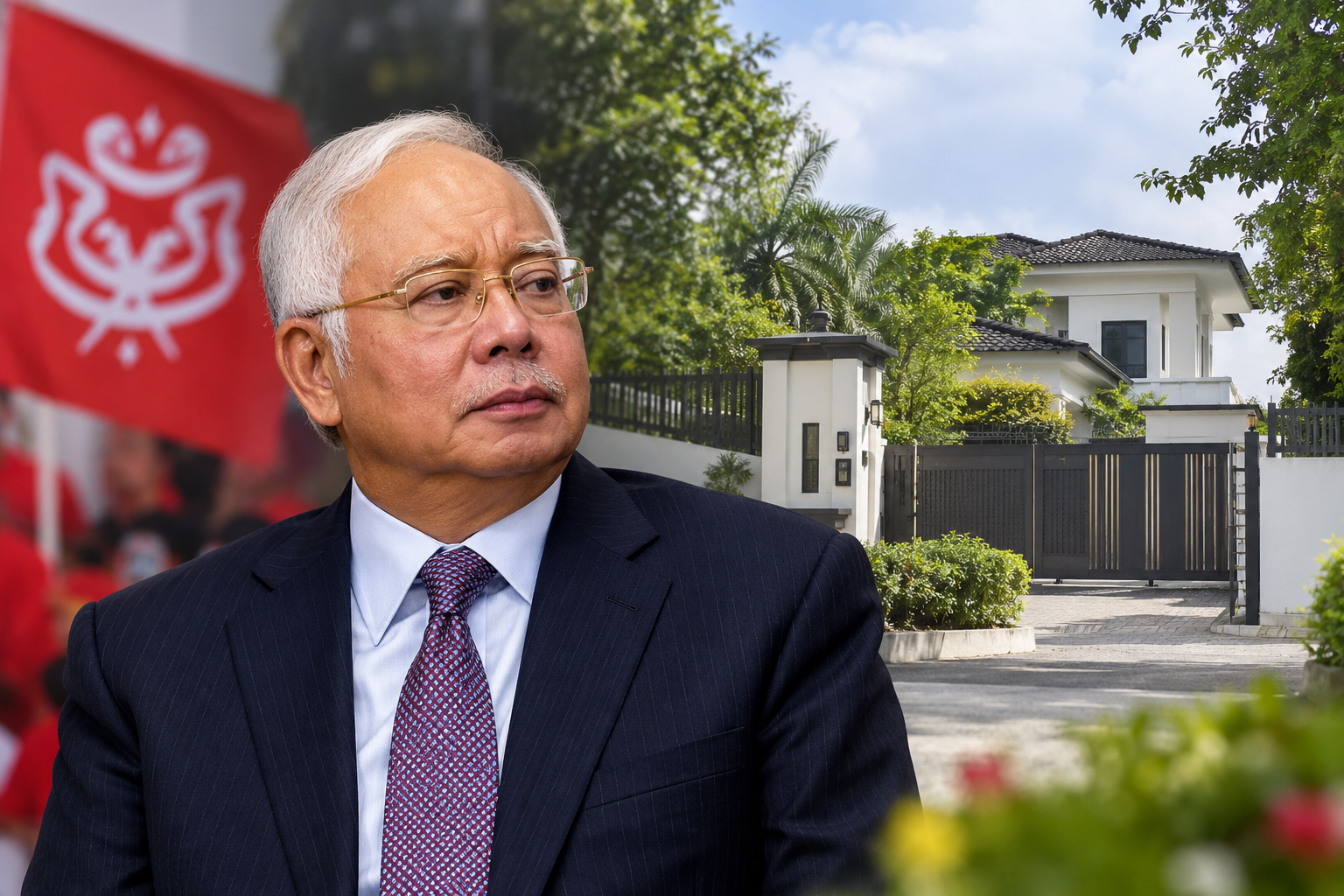
Najib to be reunited with family at Langgak Duta, Umno faces new political test
The latest development involving former Prime Minister Datuk Seri Najib Razak, who is reportedly set to serve the remainder of his prison sentence in the SRC International case at his residence in Langgak Duta, has not only attracted the attention of his supporters but could also have significant implications for Umno’s political landscape.
According to a report by Kosmo! yesterday, Najib’s defence team confirmed that he would serve the remainder of his sentence at his residence, where he would be reunited with his family.
The development marks a new chapter in the political journey of the former Umno president, who continues to command a loyal following despite no longer holding an active leadership position in the party.
However, the bigger question now is how Umno will manage the sentiments of Najib’s supporters, particularly as the party works to strengthen its position within the Unity Government.
For some Umno supporters, the development could provide a much-needed morale boost after years of closely following the former leader’s court proceedings and pardon process.
Nevertheless, for Umno’s leadership, the challenge goes beyond welcoming the latest development involving Najib. The party must ensure that its focus remains on rebuilding public support, strengthening its organisational structure and preparing for future elections.
More importantly, this development comes at a time when Umno must continue balancing its political relationship with Pakatan Harapan (PH) within the Unity Government led by Prime Minister Datuk Seri Anwar Ibrahim.
Any shift in sentiment among Najib’s supporters could influence internal party discussions, particularly regarding the direction of political cooperation and strategies for upcoming elections.
However, developments surrounding Najib will not necessarily lead to an immediate change in Umno’s political position. The party remains under the leadership of Datuk Seri Ahmad Zahid Hamidi and is committed to the decisions and political cooperation framework already agreed upon.
At the same time, the Yang di-Pertuan Agong’s constitutional power of pardon and the role of the Pardons Board form an integral part of Malaysia’s constitutional framework and must be respected. Developments concerning the implementation of Najib’s sentence should therefore be viewed separately from partisan political competition and manoeuvring.
What remains clear is that Najib continues to wield political influence that cannot simply be dismissed, particularly among Umno’s traditional supporters.
The question now is whether this development will become a catalyst for restoring unity and strength within Umno, or spark a fresh debate over the party’s future and political direction.
For Umno, the real test is no longer solely about Najib’s fate, but how the party navigates this political development without compromising the stability of the Unity Government or undermining public confidence.