
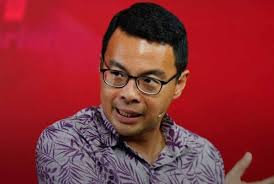
Cabinet reshuffle: Reorganising functions is the real key to reforms
LEE CHEAN CHUNG
I congratulate my colleagues who have been appointed to the new Cabinet line-up and wish them every success in their responsibilities ahead.
To borrow a football analogy, a half-time review is essential — to identify vulnerabilities, substitute underperforming players, and adjust strategies in pursuit of victory. A Cabinet reshuffle serves a similar purpose.
However, the key difference between football and government lies in structure. Ministries are not indivisible entities; they are agglomerations of departments, agencies, and statutory bodies, each operating within a defined punca kuasa — a legal and institutional mandate.
If winning the reform game is truly the objective, then reshuffling ministers is only part of the solution. The more decisive half lies in reorganising functions — realigning organisational structures so that institutions are fit for purpose and better able to deliver outcomes.
Allow me to humbly offer two illustrations.
First: SME empowerment.
Today, no fewer than 14 federal ministries play a role in SME development, with around 60 government agencies implementing SME-related programmes across these ministries. This fragmentation weakens coordination, dilutes accountability, and confuses SMEs on where to turn.
If empowering SMEs is the goal, then KUSKOP must be significantly strengthened and repositioned as a truly cross-sectoral ministry. This would entail absorbing key agencies such as MATRADE and MDEC, aligning market access, digitalisation, and financing under a single strategic framework.
At the same time, SME Bank should be reorganised and consolidated with TEKUN and Bank Negara’s SME-related functions, creating a clearer, more coherent financing ecosystem for SMEs.
Second: education reform.
If the aim is to genuinely raise education quality, then STPM — our highest-level unified pre-university assessment — must be meaningfully rewarded. High-performing students who achieve 4A results should receive placements that reflect their merit and effort, not be disadvantaged by opaque pathways.
To support this, the long-discussed transfer of STPM and Matriculation units from the Ministry of Education (MOE) to the Ministry of Higher Education (MOHE) must not only be accelerated, but also carried out with greater clarity, transparency, and policy coherence.
Without substantive structural reform, ministers — regardless of capability or goodwill — will inevitably face capacity constraints, entrenched bureaucratic norms, and institutional inertia. This, in turn, risks undermining their reform pledges and eroding public confidence in the political process.
My hope is that new ministerial faces will be accompanied by a reformed organisational architecture — one that empowers them to deliver. I wish my colleagues every success in this demanding but vital task.
LEE CHEAN CHUNG is Petaling Jaya MP and PKR Central Leadership Council member.