
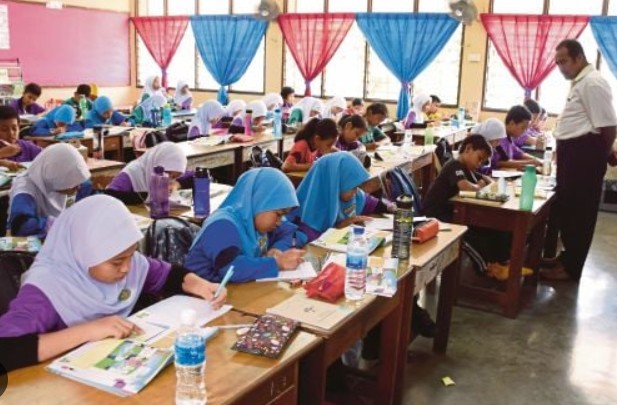
BM, English, Mandarin: There’s room for all
Sharifah Munirah Alatas
We should not keep weaponising language discourses (English, Mandarin, UEC, BM, etc.) while perpetually remaining ignorant of the conditions of world order today…it is moving towards a “multiplex” system, whereby the world may no longer be unipolar, dominated by the US, or any one power.
China and other spheres of influence have emerged (EU, Brazil, Russia, regional groupings, BRICs, etc). Multilateralism is going to be paramount, regionalisms will be the new order of interaction between nations.
It may seem that when “push comes to shove”, one hegemon and its military will dominate, annihilate, destroy and reign as THE supreme hegemon.
But a very multilayered world governance has already been in the making….geoeconomics, soft power, culture, religion, ethnicity, non-state actors ultimately trumps the military. This allows us to see where we are heading to in the next 30-50 years.
In this context, we Malaysians must move away from binary thinking…i.e. the claim that Mandarin will remove English as the global lingua franca. This is a myopic assertion because it does not consider how world orders have evolved over time, and the reality on the ground in each epoch.
Hence, historical knowledge is vital. But we Malaysians are quite ignorant aren’t we?
A “multiplex” order means the presence of more than one sphere of influence….ironically, thanks to the backlash against globalisation, something we thought was a fantastic development in human existence!
Yes.
Ultimately, globalisation has created a hegemonic world order.
The spread of one dominant cultural, economic (neoliberal capitalist), and political norm (i.e. laissez faire economics, democracy & market principles).
This system is led by powerful “white” states (historically the US, the UK, Germany, a few others in the Global North).
They are the “neo colonial” powers of today. They set the rules via institutions (e.g. IMF, WTO) which they control.
They marginalise, they impose values, they dictate what is considered excellent, what is considered progressive.
“Integration” in the context of globalisation means “benefits to the hegemon’s interests”….we in the global majority (I no longer use the term “Global South”), are marginalised in terms of distribution of economic & natural resources, including our diverse forms of identity which are regarded as “primitive”, “quaint”, “non-productive”.
Importantly, this “hegemonic” globalisation uses material power (military/economic) and ideological persuasion (democracy, “freedom”) to align other nations, in the name of interconnectedness. It reinforces the system….yet we romanticise “globalisation” which has in reality created massive global inequities.
But, thanks to the rise of China, and a few post-colonial states we are slowly evolving into a few competing, but mutually-beneficial and interactive spheres of influence.
The unipolar/bipolar era is on the decline. There’s a lot of research emerging about this.
Perhaps our policy makers might want to spend a little more time reading? Consult more scholars too please, especially when you want to articulate opinions about why English or Mandarin should not be considered important for our national identity or progress as a nation.
The multiplex order suggests there’s room for a few pivotal languages to facilitate the smooth operation, of commerce, technology, diplomacy, peace.
It allows us to reject the monster that “globalisation” has become.
Look at it this way please.
We MUST insist on the mastery of Bahasa Malaysia—no two ways about this.
And even if we recognise UEC for entry into our public universities, these students will also have a credit (or even distinction?) in Bahasa Malaysia.
And English is a MUST as well!
However, in this conversation, we Malaysians let emotions takes over, argue in a vacuum without seeing the bigger picture, without intellectually venturing out of our small cognitive ignorant boxes.
Link the entire narrative to the country’s regional and global survival…plain and simple. Yet, we love to be stuck in ethno-religious toxicity.
This is backward.
It is pathetic.
And lost in all the noise and panic about whether to recognise UEC or not is our lingering inertia to improve the “QUALITY” of our education to nurture critical thinking, to school our young about a world larger than Hang Tuah and Parameswara, or to move away from turning myths about our flying and super skilled shipbuilding Malays who “conducted classes” for the Romans, into some sort of reality.
We conveniently neglect what needs fixing. Our national schools and public universities are of deplorable intellectual quality; the school curriculum is parochial.
It’s time to churn out subjects that educate young Malaysians about other religions, about civilisations other than Islamic civilisation, about the impact Indian & Chinese civilisation has had on our region, and on Malay history & civilisation which has been very assimilative and open for centuries, but today is tarnished with false narratives in support of divisive political agendas.
For example, teach young school-going Malaysians why there are so many Sanskrit words in BM.
Be proud of our Hindu and Buddhist heritage, and the influence our history has on our daily lives.
E.g: Agama, bahasa, bumi, denda, guru, isteri, karma, kepala, maha, menteri, putera, puteri, raja, samudra, wanita, syurga…..ALL these words are of Sanskrit origin.
Do our young know why??? They are not taught of our rich Hindu & Buddhist links.
This is a powerful way towards unity in the country through education.
We must stop wasting time.
Sharifah Munirah Alatas is a Malaysian academic who was recently appointed into the National Unity Advisory Council